
Systematics for wild organisms

Hypericum perforatum L., St. John’s wort, being preserved as a herbarium specimen.
Photo by Olia Nayda on Unsplash
What is taxonomic nomenclature?
Most people know the so-called binomial name structure for species in nature developed by Carl von Linné in the 18th century. The plant in the picture is in English called St. John’s wort, and the taxonomic (often called scientific or botanical) name is
Hypericum perforatum L.
The form is genus + species epithet + author, in this case “L.” for Linné, because he first described the species and documented it with a herbarium specimen.
Biology sciences map the organisms in the biosphere using taxonomy, where the content of all classification categories (family, genus, species, etc.) are referred to as taxa (taxon in singular). The focus nowadays is to reconstruct taxonomies representing evolutionary relationships, mainly through phylogenetic mapping, and use nomenclature to express this. Phylogenetics is the term for the integration of multiple character datasets (in which genetic datasets dominate) in order to reconstruct evolutionary relationships between species.
This research depends upon a system that in the best possible way reflects these evolutionary relationships and at the same time has a clear naming system (nomenclature) that makes it possible to keep the data about the individual life forms apart. This is necessarily a complicated field, both because life in the biosphere is complex, and because knowledge has developed over time, so that one must constantly change the current systems while they are in use. The result is that we now have different taxonomic systems and alternative nomenclatures in the biosciences, each of which, building upon its own basic principles, tries to arrange the connections that are mapped phylogenetically. The binomial nomenclature is still to a large extent used because it is so well established, though some have proposed to abandon it.
The nomenclature codes for taxonomy
Nomenclature codes are maintained by professional commissions of organizations of taxonomists. Their goal is to keep the rules of nomenclature as clear as possible and applicable to all possible instances of ever published taxon names or those to be published in the future. The most relevant for this project are:
The International Code of Nomenclature for algae, fungi, and plants (ICN)
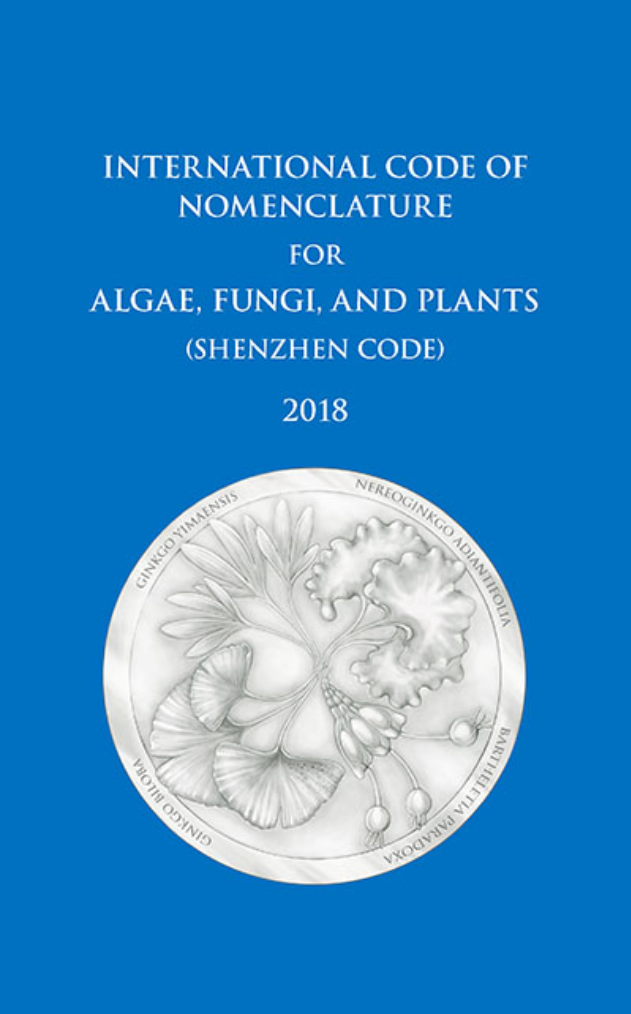
Maintained by the International Association for Plant Taxonomy. The current version from 2017 is called the Shenzhen Code, due to the tradition of naming the codes after the location of the International Botanical Congress (ICB). This is such a complicated document that one of the people responsible for it, Nicholas Turland, has published a guidebook called The Code Decoded, which can be read online. See also Wikipedia.
International Code of Zoological Nomenclature (ICZN)
Maintained by the International Commission on Zoological Nomenclature (ICZN). ICZN writes the following about which organisms are covered:
“The ICZN only applies to animal names, and not to names of plants, fungi, bacteria or viruses, which are covered by separate codes of nomenclature.
Animals include metazoans and protists that have been historically considered in the Kingdom Animalia (i.e., protists that do not primarily use photosynthesis as an energy source, if so they are generally considered to be plants and will fall under the botanical Code, ICN). Although higher-level classifications have changed with modern research, which Code (Zoological, Botanical or Bacterial) covers a particular taxon generally remains constant, as it is agreed that the ultimate goal of nomenclatural rules is to maintain stability in names and not to reflect perspectives on phylogenetic relationships. Thus, for example, fungi remain covered by the Botanical Code, and there is little interest in changing this, despite modern consensus that they have a sister relationship with animals and not plants. Protists that have characteristics of both animals and plants are considered ‘ambiregnal’ and are treated following the rules of both the ICZN and ICN.”
Andrew Polaszek: A universal register for animal names Article in Nature
The Biocode – an attempt of a unified taxonomy for all of life
The last to mention here is in principle interesting for the Culton project, because of the shared ambition to create unified systems for all life forms.
An attempt has been made to build an all-encompassing bioscientific nomenclature for all life forms in nature, the Draft Biocode (1997) and Revised Biocode (2011), developed by the International Committee on Bionomenclature (ICB). This has not been successful so far, especially due to differences between zoology and botany. See the following for the discussion:
Werner Greuter & Dan H. Nicolson: Introductory comments on the Draft BioCode, from a botanical point of view
Alain Dubois: A zoologist’s viewpoint on the Draft BioCode
Wikipedia(EN): Taxonomy, Taxonomic rank, Evolutionary taxonomy, Phylogenetics, Plant taxonomy, List of systems of plant taxonomy
Last Updated on 2023-04-03 by Karl Aakerro